
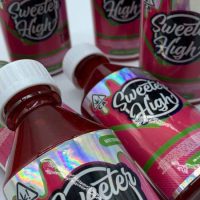
Federal laws permit hemp-derived THC syrups containing less than 0.3 per cent delta-9; however, drivers crossing state borders must meet state-level requirements. Generally, hemp legislation is interpreted through state laws, limiting servings, setting caps, or limiting what kind of hemp can be used. It is possible for a syrup bottle that was fully compliant in the state in which it was purchased to become legally ineligible halfway through a road trip without the traveller doing anything. Anyone planning to carry syrup between states should first see the product label closely, note its total THC per container, and match that number against the rules of every state on the route. The label carries the batch details, the lab reference, and the serving math, and those three items answer most questions a checkpoint or curious officer could raise. Preparation before departure beats explanation after arrival in every version of this scenario.
State lines change syrup rules
States sort hemp syrup into three broad groups, and knowing which group a destination belongs to shapes the entire packing decision. A route through two permissive states means little when the highway passes one prohibitive stretch between them. Checking each state along the drive, not only the destination, keeps the whole journey inside the lines.
- Permissive states follow the federal definition and allow compliant hemp syrup with ordinary retail rules.
- Restricted states impose total THC ceilings, milligram caps per container, or bans on specific formats, including beverages and syrups.
- Prohibitive states treat any intoxicating hemp product as a controlled substance regardless of federal paperwork.
Legality lives in paperwork
Paperwork does the quiet work on any trip involving hemp syrup. A printed COA matching the batch number on the bottle proves the contents at a glance, while the original sealed packaging confirms the product matches its paperwork. Receipts add a purchase date and location, useful when questions arise about where the item entered the vehicle. Digital copies stored on a phone back up the printed set. Travellers who keep documentation in the same bag as the product itself close the distance between question and answer, and short interactions stay short.
Routing keeps syrup legal
Route planning turns legality research into practical safety. Mapping the drive before departure, listing each state crossed, and checking current rules for every one takes an evening at most. Rules in this category move quickly, so a check done months ago deserves a refresh the week of travel. Flying changes the picture entirely, since airport screening operates under federal authority and airline policies add their own layer, which makes ground travel the simpler option for carrying compliant syrup. When any state on the route lands in the prohibitive group, shipping alternatives or a purchase at the destination removes the risk from the vehicle altogether.
State lines can only be crossed legally by travellers who know what their bottles contain, what their states allow, and what paperwork proves the matches. Legally complex trips can be made easy by reading labels, sorting routes into permissive, restricted, and prohibitive segments, and carrying the COA along with the product. The rules keep shifting as legislatures meet, and the traveller who refreshes the research before each journey stays comfortably inside every line worth respecting.